
Where should a porta potty go on a job site?
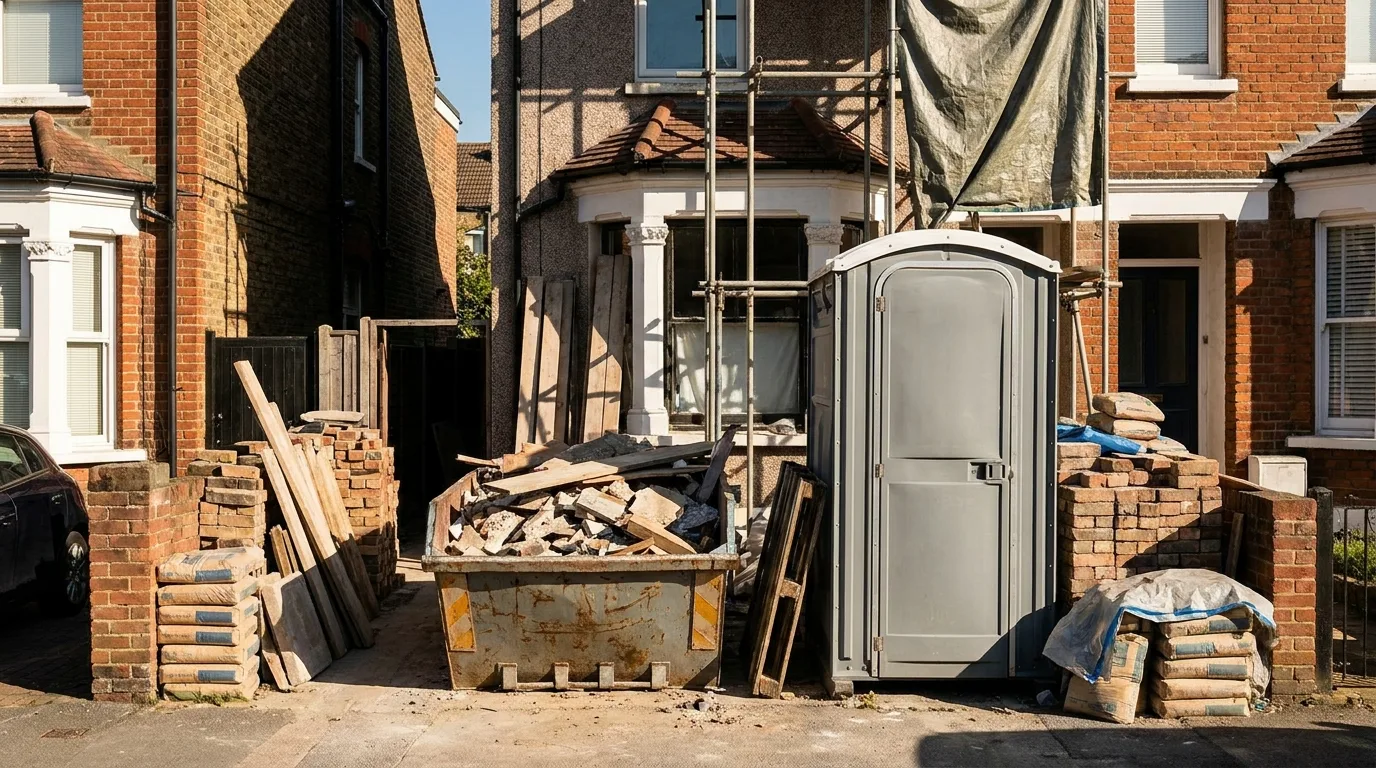
Pick flat, stable ground first. ADA Standards section 302.1 calls for surfaces that are stable, firm and slip resistant, and that matters as much for the service truck's footing as for the user's. Leave a straight shot of roughly 60 feet behind where the truck parks so the pump hose reaches without snaking around equipment or a dumpster. If you are also renting a roll-off dumpster rental for the same job, keep the two units separated so neither delivery blocks the other; a dumpster placement permit in Richmond may apply depending on where the container sits relative to the curb, and that is worth confirming with the city before drop-off, since we don't carry a fixed dumpster placement permit cost to quote here. For construction crews, OSHA 1926.51(c) sets the ratio that drives how many units you need and where you cluster them; our how many porta potties do I need guide walks through the math. A standard unit runs about 44 by 48 inches on the ground and stands roughly 92 inches tall, so measure your spot before delivery day, not after the truck shows up.
How much clearance does a portable toilet need?
Plan on a minimum of 36 inches of clear path to the door under ADA Standards section 403.5.1, and a 32 inch clear door opening per ADA Standards section 404.2.3 if you're placing an ADA accessible porta potty. Where several standard units cluster together, ADA Standards section 213.2 requires at least 5 percent to be accessible, never fewer than one. Inside an accessible unit, ADA Standards section 304.3.1 calls for a 60 inch turning circle, and reach ranges under section 308.2.1 top out at 48 inches. Door hardware needs to work with one hand and no more than 5 pounds of force under section 309.4. If the ground slopes toward a ramp approach, keep it at 1:12 per ADA Standards section 405.2. These numbers matter just as much for a restroom trailer rental ramp as for a single unit, and if you're weighing a 2 stall restroom trailer against a bigger 4 stall restroom trailer or 8 stall restroom trailer, clearance planning happens before you pick a size, not after.

Can I place a porta potty in the street or right of way?
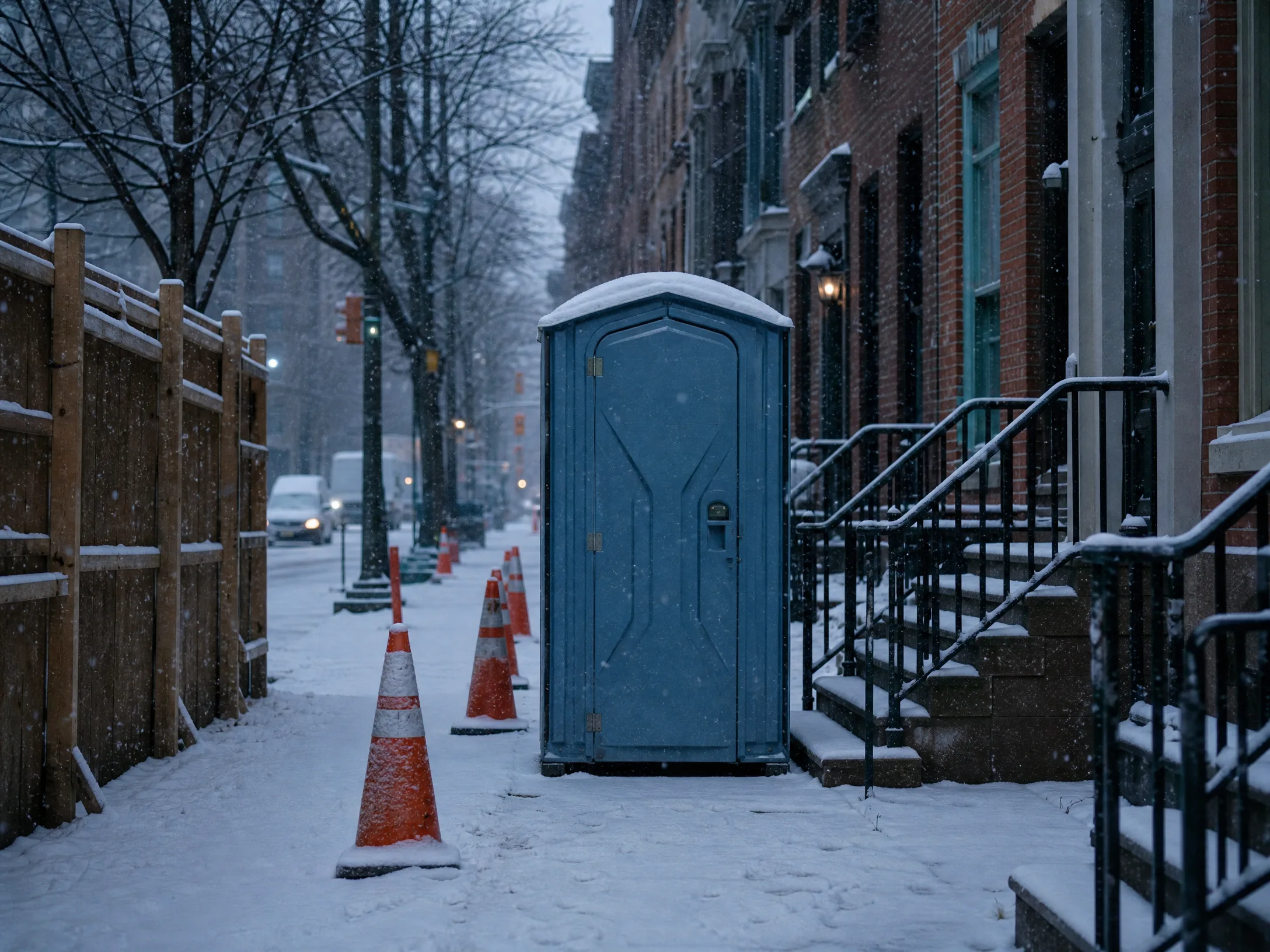
Not without checking with the city first. Placement in the public right of way in Richmond needs confirming with the city before you commit to a spot near a curb or sidewalk, and we don't have a fixed municipal fee or ordinance number to hand you here, so treat that as a phone call, not a guess. The same applies to temporary fence rental panels set up around a unit for privacy or crowd control; if fencing crosses into the right of way, that's another confirmation call. Barricades used to protect workers or pedestrians near a placement site should meet ANSI D6.1 as referenced in OSHA 1926.202. If your event needs a chain link temporary fence around a whole restroom bank, coordinate that layout with your event restroom rental plan so trucks can still reach every unit for weekly service. For sites near a septic system rather than a rented unit, keep in mind a residential tank is typically pumped every 3 to 5 years depending on tank size and household size, which matters if you're routing septic pumping service trucks across the same access path.
What else affects placement on a construction or event site?
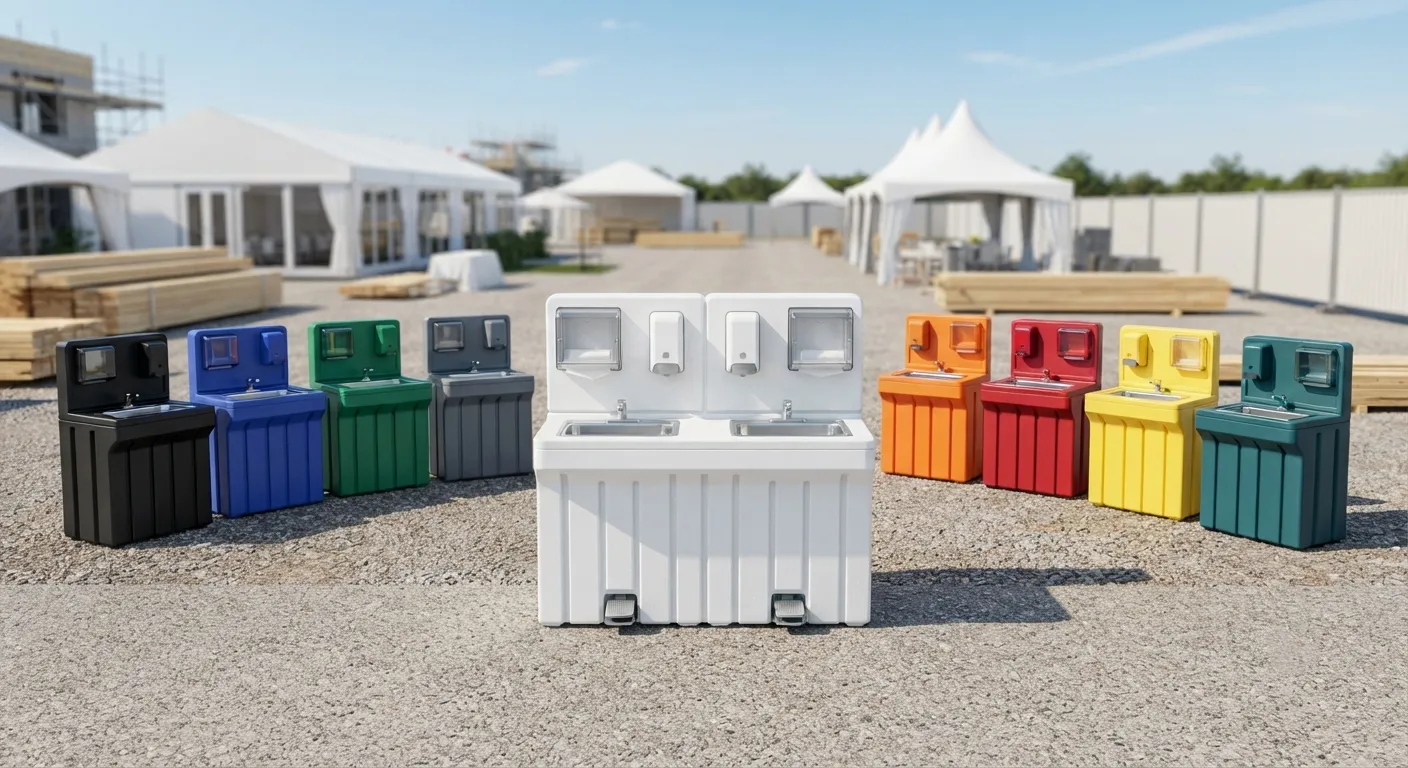
Lighting and power. OSHA 1926.56(a) sets minimum illumination for construction areas, so a unit tucked in a dark corner needs a light tower rental nearby if crews work early or late. If you're running a temporary power pole for the site, keep GFCI protection per OSHA 1926.404(b)(1)(ii) in mind for anything electrical near a handwashing setup. Speaking of which, OSHA 1926.51(f)(1) requires washing facilities where crews apply paints, coatings, herbicides or insecticides, so a handwashing station rental or portable sink rental belongs right next to that work, not across the lot. Under 29 CFR 1910.141(d)(2), washing stations need soap and towels or a hand dryer; sanitizer alone doesn't satisfy it. If you're running an Ozark River unit and need an ozark river portable sink replacement parts source, check with your supplier directly, since we don't stock those parts ourselves. Keep debris cleared per OSHA 1926.25, and if you're storing tools or need a mobile office trailer replacement doors quote for a damaged unit, that's a separate conversation with your mobile office trailer rental provider. Richmond sites 1.9 miles from San Pablo or 5.5 miles toward El Cerrito still fall under the same placement logic; distance from our yard doesn't change the clearance math.
How far from the house should I place a portable toilet?
There's no fixed distance rule in our fact set, but keep it on stable, level ground with a clear path for guests and a straight shot for the service truck. For a backyard event, treat it like a home renovation job: check our home renovation porta potty guide for typical setup spots.
Do I need a permit to place a porta potty on my property?
Sometimes, depending on where it sits. Placement in the right of way needs city confirmation; on private property, rules vary. See our porta potty permit requirements page, and call Richmond's permitting office before delivery if the unit sits near a public sidewalk or street.
How many porta potties does a construction site need?
OSHA 1926.51(c) sets the baseline: one toilet for 20 or fewer workers, then additional seats as headcount rises past 20 and again past 200. Our OSHA portable toilet requirements page breaks the full ratio down by crew size.
Can a dumpster and porta potty share the same delivery spot?
Not the same spot, but they can sit close if there's room for both trucks. A roll-off needs about 60 feet of straight clearance behind it, so plan two separate paths. Check dumpster sizes and dimensions before you finalize the layout.
What if my septic tank backs up instead of using a rented unit?
That's a different problem than placement. A residential tank typically needs pumping every 3 to 5 years; if yours is overdue, our septic tank warning signs page covers what to watch for, and emergency septic service covers same-day response.
Next step
Get a delivery date
Tell us the address, the dates and the headcount. We size the order and confirm the route.