
What Does OSHA Require For Farm Worker Restrooms?
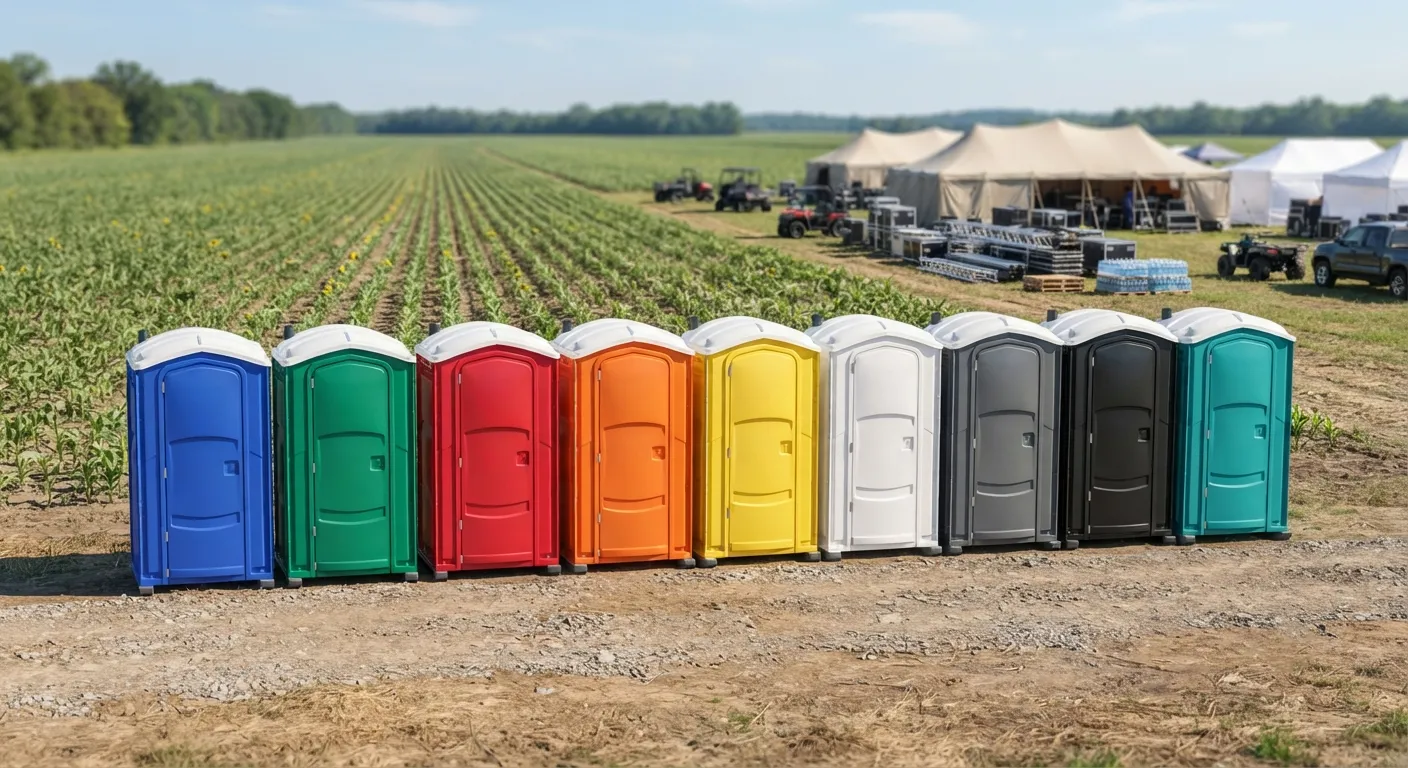
OSHA 1928.110 covers field sanitation for hand-labor agricultural work, and it is specific: potable water, toilet facilities and handwashing water at a ratio of one facility per 20 employees, all within a quarter mile walk of wherever people are working. That is different from the general construction rule under OSHA portable toilet requirements, which is built around 1926.51(c) and fixed job sites, not spread-out fields. If your crew moves across a large parcel during the day, that quarter-mile distance is the number that decides how many units you need and where they sit. Richmond Porta Pros places standard porta potty rentals close to the actual work rows, not just at the property entrance, because a unit parked at the gate does nobody any good three hundred yards out. We also bring handwashing station rental units alongside the toilets, since 1928.110 treats water for handwashing as a separate requirement from drinking water under 1926.51(a)(1). If your operation handles pesticide or herbicide application, washing facilities tied to those chemicals fall under OSHA 1926.51(f)(1), and that is worth planning for separately from general field sanitation. For crews unsure how many units a given acreage needs, our how many porta potties do I need guide walks through the math, and porta potty placement guide covers ground conditions specific to unpaved farm access.
How Many Restrooms Does A Farm Site Need?
The count comes down to crew size and how far apart your work areas sit, since 1928.110 measures distance, not just headcount. A single field crew of 20 or fewer needs one toilet under that quarter-mile rule. A larger operation running two or three crews across separate fields in Richmond will often need a cluster near each work zone rather than one bank of units at a central yard. Richmond Porta Pros prices standard units by the day, week or month depending on your season length. A single standard unit runs in a typical range you can review on our porta potty rental cost page, and for stretch jobs through a full growing season, our monthly porta potty rental option costs less per day than short-term rates. Wash operations, packing sheds and dairy sites sometimes need something closer to a bathroom trailer; our restroom trailer rental and 2 stall restroom trailer options work for smaller crews that want an enclosed, flushable setup. If your farm hosts pick-your-own days, farm stands, or a fall event, that is a different sanitation load than daily field labor, and our event restroom rental page covers what changes when the public is on site instead of just employees.
| unit | duration | typical price |
|---|---|---|
| standard | day | $150 |
| standard | week | $200 |
| standard | month | $200 |
| delivery_fee | week | $100 |
Where Should Units Go On A Farm Or Ag Site?
Ground stability and access matter more on farm land than almost anywhere else we deliver. Our trucks need roughly 60 feet of straight clearance behind them to set units down safely, which rules out tight rows or soft ground right after irrigation. We look for a firm, level spot near the work area, ideally close to an access road so servicing doesn't mean driving across planted ground every week. ANSI/PSAI Z4.3 sets the baseline service interval at once weekly for up to 10 users over a standard 40 hour week, and heavier field crews or hot Richmond summers can call for a tighter schedule. If your operation runs livestock or needs wash water for equipment beyond what a handwashing station covers, ask about our portable sink rental or holding tank rental for larger water needs. Farms doing on-site butchering, packing, or any operation generating grease waste should look at grease trap pumping rather than treating it as a septic issue. For farms with an existing septic system serving a farmhouse or bunkhouse, a typical residential tank needs pumping every 3 to 5 years depending on tank size and household count; our septic pumping service and how often to pump a septic tank pages cover that separately from field sanitation. Richmond growers near San Pablo, 1.9 miles northeast, or Pinole, 4.6 miles northeast, fall inside our normal delivery radius without an extended trip charge.
How much does a farm restroom rental cost in Richmond?
A standard unit typically runs $150 a day or $200 for a week or month, with delivery fees separate. Multi-unit or full-season ag accounts often get better per-day rates on a monthly term. See dumpster rental cost if you're also clearing brush or old fencing during the same job.
Do farm restrooms need to be ADA accessible?
If your farm has public-facing operations, like a stand or agritourism event, ADA Standards 213.2 requires at least 5 percent of clustered units be accessible, never fewer than one. Pure field labor for employees isn't governed by ADA in the same way. Ask about our ADA accessible porta potty option.
Can Richmond Porta Pros deliver to remote farm parcels?
Yes, as long as there's about 60 feet of straight clearance behind the delivery point. Unpaved or soft ground after rain can delay placement, so call ahead during wet stretches. We also serve San Pablo and El Cerrito, 5.5 miles southeast.
How often are farm porta potties serviced?
ANSI/PSAI Z4.3 sets a weekly service baseline for up to 10 users over a 40 hour week. Larger crews or hot months usually need twice-weekly visits. See how often are porta potties cleaned for what a service visit includes.
What's the difference between farm sanitation rules and construction site rules?
Farm hand-labor sanitation falls under OSHA 1928.110, measured by a quarter-mile walking distance per 20 workers. Construction sites use OSHA 1926.51(c), based on headcount at a fixed site. Different math, different placement logic entirely.
Next step
Get a delivery date
Tell us the address, the dates and the headcount. We size the order and confirm the route.